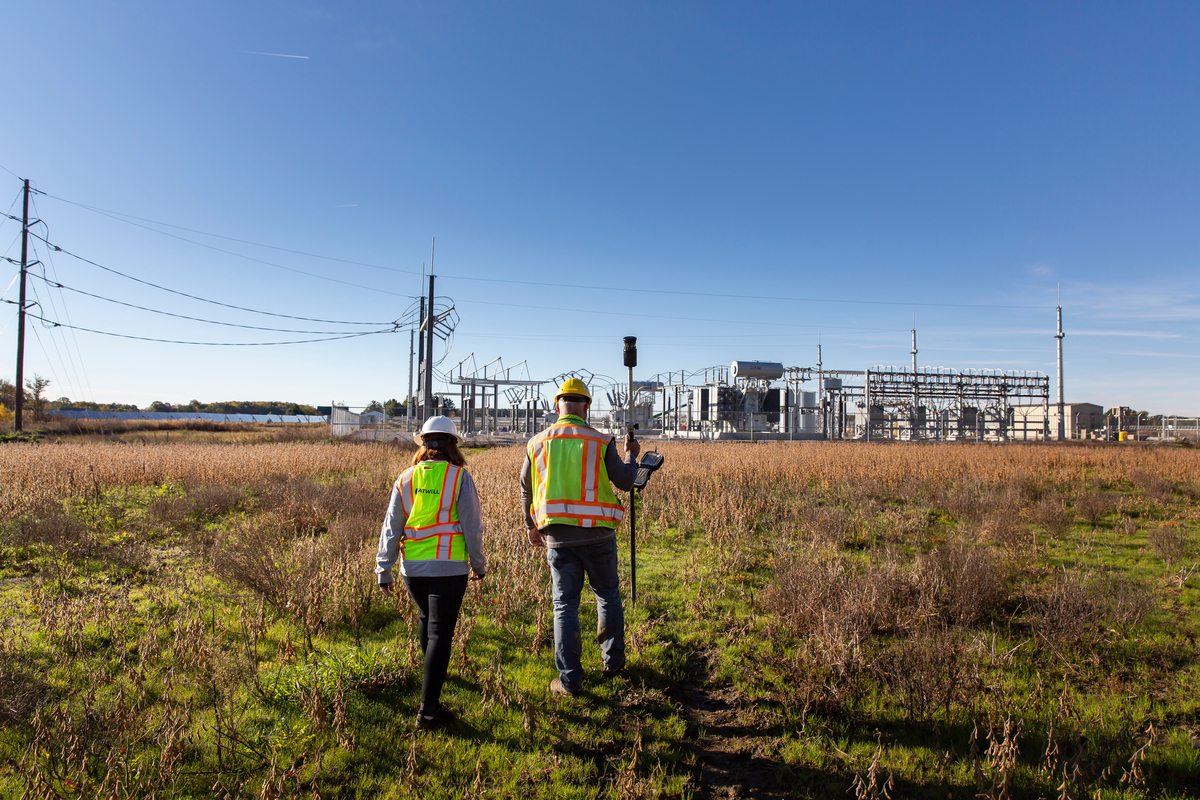
The data center development boom is unlike anything the infrastructure industry has seen in decades. AI adoption has dramatically accelerated demand for power, and developers are racing to secure land, permits, and utility capacity at a pace the grid and broader utility ecosystem were never designed to support. The result is a complex challenge that is forcing developers to rethink not just where they build, but how they power their facilities from the moment they break ground.
The tension is straightforward: developers want power now, and the grid can’t deliver it fast enough. Understanding why and what options exist in the interim is essential for any developer.
The grid constraint is reshaping development strategy
Connecting to the utility grid remains the most cost-effective long-term power solution for data centers. Grid power, purchased at commercial or industrial rates, is significantly cheaper than building and maintaining on-site generation. The problem is the timeline. Depending on the market, a meaningful grid connection can take several years when you factor in land acquisition, infrastructure planning, permitting, and construction. For a developer who wants to be operational “tomorrow,” that timeline is untenable.
Compounding the delay is a significant community relations challenge for utilities and developers. In many states and municipalities, data centers have become a flashpoint for community opposition, not necessarily because of the facilities themselves, but because of misperceptions around electricity rates and environmental impact. Many residents fear that data centers will drive up their electricity bills, even though developers typically purchase power at separate commercial rates and do not burden the residential rate base. Utilities are caught between pursuing large commercial load growth opportunities and navigating public utility commission scrutiny, ratepayer concerns, and political pressure around infrastructure expansion. Water consumption has also become a growing point of public scrutiny, particularly in water-stressed regions, even as newer facilities increasingly rely on closed-loop and more efficient cooling technologies. The perception gap between environmental impact and community concern remains wide, adding another layer of complexity to development projects.
Bridge power: A growing menu of options
Given the grid access timeline, a wide range of “behind-the-meter” and temporary power solutions have emerged. These are not new concepts, but the scale and urgency of data center demand have elevated them into mainstream planning conversations. Here is where the market currently stands:
Fuel cells. Natural gas-powered fuel cells have become one of the more prominent bridge solutions. Companies have established a meaningful foothold in the data center market. Fuel cells offer a relatively clean, scalable power source, and while they come at a cost premium over grid power, they are increasingly viewed as a viable interim or supplementary solution.
Gas turbines. Gas-fired turbines have historically been a go-to for on-site power generation, but the market is currently constrained. Turbine manufacturers are facing significant backlogs driven by simultaneous demand from data centers, power generation facilities, and natural gas compressor stations. Developers who want turbines need to place orders and commit capital well in advance, with delivery timelines that rival the grid itself.
Battery storage. Battery energy storage systems are an increasingly common component of the bridge power toolkit, often deployed in combination with other generation sources. They provide flexibility and resiliency, though they are not often a standalone solution for the sustained power loads that large-scale data centers require.
Diesel and dual-fuel generators. Diesel and propane generators remain in the mix as backup and supplementary sources. Their capacity limitations, however, make them better suited to redundancy roles than primary power for hyperscale or large regional facilities.
Wind and solar. Renewable generation is viable in the right circumstances, but the land footprint required to generate meaningful megawatts can be substantial. Developers who can integrate a solar or wind component into a larger site plan may find these options increasingly attractive, particularly as permitting for smaller distributed sites becomes more common.
The decision framework: Cost, speed, and long-term fit
For most developers, the conversation around bridge power comes down to a tradeoff: is the cost of a temporary or permanent behind-the-meter solution worth it compared to waiting for grid access? Well-capitalized developers like large hyperscalers and institutional players often have the balance sheet to pursue either path. The decision becomes more nuanced for mid-market developers working with tighter margins.
The key variables are rarely just financial. Speed to market, site-specific constraints, local regulatory dynamics, and the developer’s long-term operational strategy all factor in. A developer with a site near an existing substation faces fundamentally different considerations than one in a greenfield location with no nearby infrastructure. Getting the analysis right from the outset before land is committed or capital is deployed is where strategic planning makes the biggest difference.
Looking ahead at a market in transition
The current pace of data center development is extraordinary, but it will likely moderate somewhat. The land-acquisition frenzy of the past 18 to 24 months is beginning to encounter the natural limits of grid capacity, equipment supply chains, and public acceptance. The market is not stopping as AI adoption has created a demand curve that is not going to reverse but it is maturing.
One meaningful shift on the horizon is a move toward smaller, more efficient facilities. As chip technology advances, data centers will be able to do more with less space and less power. A portfolio of five 20-acre facilities may ultimately replace the need for a single 100-acre hyperscale campus. That model is both easier to permit and more resilient from an infrastructure standpoint. The underlying demand for power will continue to grow; the physical footprint required to meet it may not grow at the same rate.
The importance of creating a strategy to meet the needs of today
Navigating the intersection of land, power, permitting, and infrastructure planning requires an integrated strategy from the outset.
The most effective engagements begin early, well before a site is selected, before a power strategy is committed, and before regulatory exposure is locked in. Our role as a strategic partner is to help developers understand the full landscape of options, stress-test their assumptions, and build a plan that is grounded in what is actually achievable in a given market and timeline.
The challenges shaping data center development today are not going away. But for developers who approach them with the right team and the right plan, they are navigable.